Type of event
Date
2020-11-12
Location
Israel Institute of Technology (Haifa, November 2020)
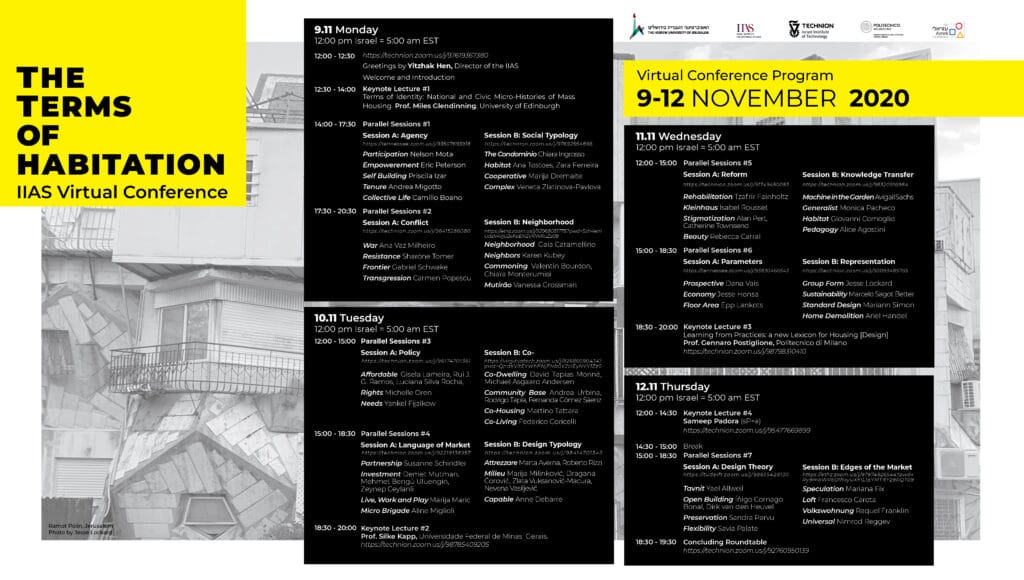
The contribution investigates the use of the term “loft”, and the transliteration of its meaning, within the backdrop of China’s first tier cities, by examining the emergence and communication of lifestyle ideas of real estate developers. The book Loft Living: culture and capital in urban change by Sharon Zukin was a precursor not only in discussing lofts as a new dwelling style but also in indicating lifestyles as a relevant subject of investigation in housing and urban studies. From that time, many researchers focused on the analysis of lifestyle patterns in housing choices, investments and related theories, as well on how lifestyle ideas are used by real estate promoters to market their estates. However, the relationship between lifestyle ideas of real estate investors and the configuration of housing types, and their related spatial and material features, has not been fully explored yet, and this particularly in the context of China’s recent housing market development. The research, presented in this contribution, thus connects a content analysis of housing advertisements and a spatial analysis of three different cases of real estate development in which the term loft has been adopted in the marketing materials to denominate newly built housing spaces that intentionally aim at calling to mind embedded imaginaries of “loft living” in the west. In so doing, the study depicts that, within this context, the term “loft” surpasses its original meaning—“a relatively large open space in multistory industrial building or warehouses in the United States”—but it expresses and exploit its symbolic value to connect with the emerging lifestyle aspirations of some young Chinese creative professionals nonetheless. In this manner, the research investigates how the definition of a housing type can properly generate through a discourse established and shared by those involved in the production of architecture and the city, in this case real estate developers. In conclusion, the essay argues that the definition, sometimes forced or invented, of a housing type can act as a mediator into the communication between housing suppliers and their possible customers, not only as an informative tool but also as a persuasive and rhetorical device.