Type of event
Invited Lecture
Date
2025-11-14
Location
University of Kansas, Lawrence, Kansas, US
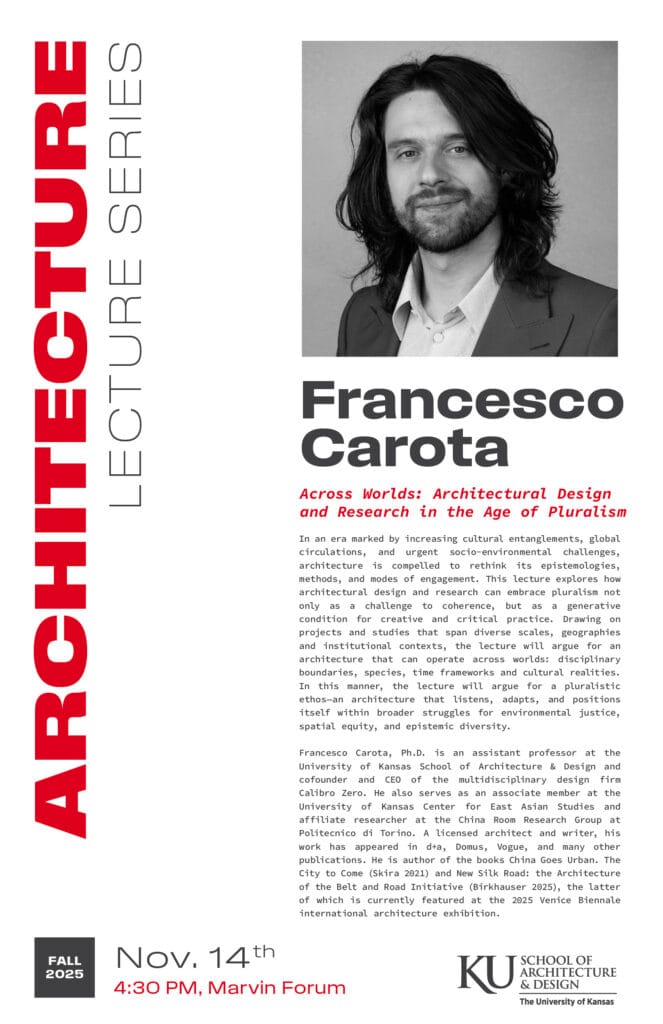
In an era marked by increasing cultural entanglements, global circulations, and urgent socio-environmental challenges, architecture is compelled to rethink its epistemologies, methods, and modes of engagement. This lecture explores how architectural design and research can embrace pluralism not only as a challenge to coherence, but as a generative condition for creative and critical practice. Drawing on projects and studies that span diverse scales, geographies and institutional contexts, the lecture will argue for an architecture that can operate across worlds: disciplinary boundaries, species, time frameworks and cultural realities. In this manner, the lecture will argue for a pluralistic ethos—an architecture that listens, adapts, and positions itself within broader struggles for environmental justice, spatial equity, and epistemic diversity.